
Every year, millions of pieces of clothing are donated with good intentions. Some find a new home, but many do not. The volume of unwanted textiles has grown so large that some donations are exported overseas, while others eventually make their way to landfills or other waste streams because there simply aren’t enough people to wear everything we produce.
The conversation around sustainable fashion often feels like a choice between two extremes: continue buying newly manufactured clothing or rely entirely on thrift stores and older garments.
But perhaps there is another option.
What if we stopped seeing clothing as the final product and started seeing it as a temporary form of fabric?
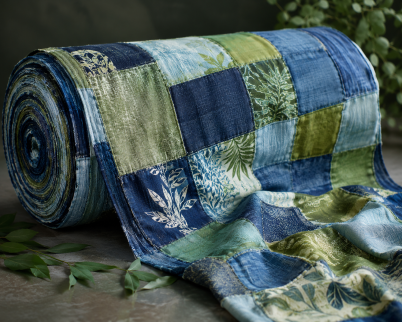
Imagine collecting textiles that can no longer be donated, washing them, removing reusable hardware like buttons and zippers, sorting the remaining fabric by color and fiber, then stitching those pieces together into new rolls of patchwork fabric. Even the smallest scraps could be redirected into products like insulation, stuffing, felt, or paper, allowing as much of the material as possible to continue serving a purpose.
Instead of asking people to stop creating new clothing, we give designers, artists, and makers a new starting material. Fabric that has already lived one life could become something entirely different—a dress instead of a shirt, a quilt instead of a pair of jeans, artwork instead of waste.
We don’t have to choose between creativity and sustainability.
We can continue designing, experimenting, and following new ideas while giving existing materials another chance to become something meaningful.
Perhaps the goal isn’t to stop making new things.
Perhaps it’s to stop treating good materials as though their story ends with the first thing they become.
If fabric can outlive the clothing it was first sewn into, what else are we throwing away before its story is finished?